Workflow Automation · For Labs & Facilities

Microscopy workflow automation for ZEISS-based environments

Custom-built for your workflow and instrument setup.

Many labs and facilities end up treating parts of the workflow as unavoidable manual work: the inspection that takes far longer than it should, the report assembled by hand after every run, the acquisition that only works when one specific person sets it up.

Often, these are not hard limits of the instrument. They are workflow and software problems, and many of them are fixable.

X Y
Problems we have seen before These can often be improved with custom software.

"Our workflow works, but it only works when the right person is at the instrument."

"Every session is set up slightly differently. Results are inconsistent between operators."

"We have been told the software cannot do what we need. We are stuck."

"Our analysis is done manually after acquisition. It takes longer than the imaging itself."

40+ projects across Semiconductor Life Science Medical Devices Aerospace Automotive & Manufacturing Materials Research Oil & Gas Academic Research
Services

Types of projects we deliver

We build custom automation software that connects to your microscope and the tools around it. Most projects involve a mix of acquisition control, image analysis, and structured output. The delivered solution runs in your environment, is built around your workflow, and is documented so your team can maintain and extend it later without being dependent on us for every change.

Custom workflow software for ZEN

Your workflow requires a skilled person to make hundreds of small decisions: adjust focus, draw a region, measure a feature, export a result. It takes hours. It varies by operator. It does not scale.

We write software that handles those specific steps automatically. The operator launches the job; the system takes care of the repetitive part. The software just handles the decisions that can be written down and repeated.

Outcomes
  • Reduced operator-to-operator variation
  • Reliably shorter measurement and analysis time per sample
  • Automatic reports, structured data files, organised image archives
  • Higher throughput: the instrument works more, your team focuses on higher-value tasks
  • Structured documentation across runs, parameters, and outputs

ZEN Blue, ZEN Black, ZEN Core; Python, C#, VBA; OAD macros and ZEN extension APIs; HALCON, Arivis Cloud, MVTec Deep Learning, ZEN Intellisis, ZEISS Deep Vision; SEM, confocal, widefield, and slide scanning systems.

Multi-instrument and hardware-extended workflows

Some workflows require more than one instrument, or depend on a device (a filter wheel, a specialised camera, an AFM, an incubator) that ZEN does not natively control. Every system switch is a manual step, a metadata gap, and a reproducibility risk.

We build the integration so the sequence can be coordinated through a single workflow centered on ZEN. Stage control, triggering, data handoff, and metadata happen in one coordinated workflow, not split across applications. The result is a single, reproducible run that captures everything together.

Outcomes
  • Multi-instrument sequences coordinated from a single ZEN session
  • Hardware devices integrated into the workflow without constant switching between applications.
  • Correlated datasets with consistent metadata across modalities

ZEN extension APIs, hardware trigger logic (TTL), Python orchestration, shared-folder event monitoring, Docker-based server pipelines.

Inside a workflow automation project

Most projects combine several of these. Understanding which ones apply is usually the first conversation we have.

Works with motorized and non-motorized microscope systems. You do not need the most advanced instrument in the range. What is automatable depends on your instrument's physical capabilities, and we will tell you exactly what that means for your setup during the first call.
Consistent, repeatable setup

When setup varies between operators, or takes too long to get right.

Guided sequences that bring the system to the same state every session: focus, illumination, stage positions. Operators start at the assigned starting point.

Automated acquisition sequences

When your protocol involves multi-position, time-lapse, tiling, or Z-stacks that need manual scheduling.

Scripted acquisition logic that runs without operator supervision. Combined sequences, focus maps, drift correction, as required.

ROI Detection and Targeted Rescanning

Automated pre-scan classification to limit high-resolution acquisition to relevant regions.

Overview image acquired first, candidate regions identified automatically, then targeted at full resolution. Removes the need to scan the entire sample. Compatible with ZEN internal analysis, QuPath, Cellpose, and Arivis Cloud models.

Overnight and batch runs

When experiments are limited by the need for someone to be present.

Queue logic, error handling, and recovery that make multi-sample and overnight sessions reliable. Your instrument runs while your team is not in the lab.

Quality checks during acquisition

When drift, blur, or failed tiles go unnoticed until analysis.

In-run detection and recovery. Bad frames retaken automatically, issues logged, the session stays usable. Problems caught during the run, not discovered afterward.

Measurement and structured output

When analysis and reporting happen manually after acquisition.

Images connected directly to measurements and reports. Every run produces the same file structure, the same metrics, the same formatted output, ready for your downstream tools.

If any of this describes your situation, tell us what you need.

Get in touch
By system type

What we can do for your setup

Select the setup that best matches your system.

X Y MOTORIZED
Motorized system
Motorized stage, automated acquisition
Select to explore →

For motorized systems, typical projects include:

Guided setup and one-click runs

Custom UI buttons and wizards that hide complexity and prevent incorrect settings.

Automated acquisition logic and focus control

Multi-position, time-lapse, tiling, Z-stacks, multi-channel and multi-modal sequences with focus maps, drift correction, and ROI tracking.

Queue and batch runners

Plates, slides, or sample lists enabling unattended overnight acquisition with run-state visibility.

Integrated image analysis and measurement

Segmentation, classification, and QC metrics connected directly to acquisition, with automatic report generation (PDF, CSV, Excel).

QC gates and auto-recovery

Automatic detection of failed tiles or fields, re-acquisition triggered automatically, and batch stitching with QC checkpoints.

Standardized export packages

Structured folders, manifests, and metadata for predictable, audit-ready outcomes every run.

MANUAL
Manual system
Non-motorized or partially motorized stage and/or other components
Select to explore →

For manual systems, typical projects include:

Guided setup and one-click runs

Custom UI buttons and wizards that prevent incorrect settings and bring the system to the right state before every session.

Integrated image analysis and measurement

Segmentation, classification, and QC metrics connected after acquisition, with automatic report generation (PDF, CSV, Excel).

Standardized export packages

Structured folders, manifests, and metadata for consistent, audit-ready outputs across sessions and operators.

Third-party hardware and software integration

Devices, incubation systems, trigger logic, and external analysis steps running natively inside ZEN.

For manual systems, typical projects include:

Guided setup and one-click runs

Custom UI buttons and wizards that prevent incorrect settings and bring the system to the right state before every session.

Integrated image analysis and measurement

Segmentation, classification, and QC metrics connected after acquisition, with automatic report generation (PDF, CSV, Excel).

Standardized export packages

Structured folders, manifests, and metadata for consistent, audit-ready outputs across sessions and operators.

Third-party hardware and software integration

Devices, incubation systems, trigger logic, and external analysis steps running natively inside ZEN.

For motorized systems, typical projects include:

Guided setup and one-click runs

Custom UI buttons and wizards that hide complexity and prevent incorrect settings.

Automated acquisition logic and focus control

Multi-position, time-lapse, tiling, Z-stacks, multi-channel and multi-modal sequences with focus maps, drift correction, and ROI tracking.

Queue and batch runners

Plates, slides, or sample lists enabling unattended overnight acquisition with run-state visibility.

Integrated image analysis and measurement

Segmentation, classification, and QC metrics connected directly to acquisition, with automatic report generation (PDF, CSV, Excel).

QC gates and auto-recovery

Automatic detection of failed tiles or fields, re-acquisition triggered automatically, and batch stitching with QC checkpoints.

Standardized export packages

Structured folders, manifests, and metadata for predictable, audit-ready outcomes every run.

Work

What this looks like in practice

Three projects with different problems, different instruments, different contexts.
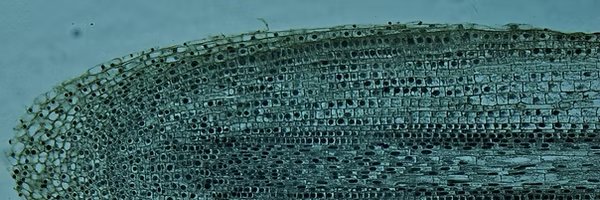
Microscopy core facility workflow automation inside ZEISS ZEN
Plant biology · Live imaging
Public research institute, France · ZEN Black, LSM 700

"Growing roots drift out of the field of view in under an hour at high resolution. Overnight experiments required someone at the microscope all night."

The lab needed long time-lapses of growing root tips, often running for hours or overnight without an operator present. Roots move continuously, and the microscope has no built-in way to follow them.

We built a closed-loop tracking system: after each image, the software estimates how far the root tip has moved by comparing it to the previous image, then repositions the stage to keep it in frame. Sessions can be paused and resumed across workstations. The dataset comes out as a continuous time-lapse, not a collection of manually corrected fragments.

Implemented in ZEN Black: automated time-lapse loop, image-registration-driven stage repositioning, resumable session state. VBA macro integrated with an external image registration module.
Precision microscopy research with multi-system integration
Biophysics · Multi-system integration
University research lab, Belgium · ZEN Blue, LSM 980 + AFM

"AFM and LSM were two independent systems. They couldn't capture the same event at the same time. What was needed was simultaneity."

The lab studies virus-cell and immune-cell interactions at the nanoscale, combining AFM topography with fluorescence imaging. The two instruments shared the same frame but had no native synchronisation, so post-hoc alignment could correct drift but not reconstruct what happened simultaneously in both modalities.

We built a synchronisation loop: the LSM sends a TTL trigger to start each AFM line; when the AFM completes a line, it writes a completion file that ZEN detects and uses to trigger the matching optical acquisition. The two systems run in alternating rhythm, coordinated at the line level. AFM lines are stitched automatically and displayed alongside the corresponding fluorescence data.
Implemented in ZEN Blue: Experiment Feedback module with shared-folder event monitoring, TTL trigger output for AFM initiation, and Python module for automated AFM line stitching and correlated display.
Industrial oil and fluid analysis in laboratory setting
Industrial · Wear particle analysis
Oil and gas company, France · ZEN Core

"Analysing multiple oil filters in a session required separate setup steps for each one. Manual configuration, separate exports, no consistent structure across runs."

The lab analyses particles from used lubricant oil to monitor wear in industrial equipment. Each session involved multiple filters, and the previous process required setting up, running, and exporting each one separately, with results that were inconsistent between sessions.

We built a single guided workflow for the full session. The operator confirms focus once per filter; the system handles tiled acquisition, particle segmentation and classification, and structured output with consistent folder naming and labeled representative images per defect class.

Implemented in ZEN Core: Jobs workflow with dynamic input form, ZEN Intellisis classification model, configurable JSON-based session parameters, and automated per-filter output packaging.
About us

Based in Leuven, Belgium, and Romania.

Projects delivered
40+ across semiconductor, life sciences, medical devices, materials science, and industrial applications.
In the ZEISS ecosystem
7 years across ZEN Blue, ZEN Black, and ZEN Core. Work delivered in Python, C#, and VBA, including OAD macros, ZEN extension APIs, and integrations involving HALCON, Arivis Cloud, MVTec Deep Learning, ZEN Intellisis, and ZEISS Deep Vision.
Typical project
4 to 12 weeks. Fixed price agreed before development starts. The deliverable is software your team can run independently, with post-delivery support included.
Where we work
Projects delivered remotely across Europe and beyond.
Arthur Sraum
"Writing software that works inside a real microscopy workflow is harder than it looks. You have to understand what the experiment is trying to achieve, what the instrument can and cannot do, and where software can genuinely help without getting in the way.

We are engineers first, but after seven years in the ZEISS ZEN ecosystem we have learned how people at the microscope actually work: what they care about, what slows them down, and what a useful solution looks like in practice.

When someone describes a workflow to us, we can usually picture the structure of the problem quickly. That shared understanding is often what makes the difference."
Arthur Sraum, Founder, SmartLabs
How we work

The process

We check fit before we scope, and scope before we build. No ambiguous deliverables, no surprises on price.

STEP 01
Discovery

We understand the problem together. You describe the workflow, we ask specific questions. We will tell you honestly what is feasible and whether it makes sense to proceed. No cost, no commitment.

STEP 02
Proposal

Once we understand the problem, we define scope, deliverables, fixed price, and timeline in writing. Everything agreed before development starts.

STEP 03
Development

Built around your actual setup, developed in local simulated environments, and validated on your real system. Regular updates throughout so you can redirect early if priorities shift.

STEP 04
Handover

Tested on your instruments. Documentation included. The goal is software your team can run and understand without depending on us.

STEP 05
Support

A support period is included after delivery. If your workflow evolves or your instrument changes, we can extend, adapt, or maintain the software.

Describe what you want your workflow to do. We will tell you what is feasible and we will tell you how we can help.

Get in touch
FAQ

Common questions

Direct answers to the questions that usually come up during the first call.

I thought ZEN already does automation. What does custom software add?
ZEN already includes powerful automation and analysis capabilities. Custom software does not replace those tools; it adapts and connects them to a specific workflow, instrument setup, sample type, and output requirement. In practice, the value comes from turning general-purpose capabilities into a guided process that fits how your lab actually works.
We have a non-motorized or older microscope. Can you still help?
Yes. A significant part of our work involves non-motorized and older ZEISS systems. Many of the most useful improvements, like consistent guided setup, automatic measurement from images, structured output, and automated reporting don't require a motorized system. What is automatable depends on what your instrument physically supports, and we will map that out together during the first call.
We are not sure our problem is big enough to warrant a project.
The first conversation is free and there is no minimum project size. Some projects are delivered in two to three weeks. If we think the effort is not worth it for your situation, we will say so. No pressure to proceed.
Will it work on our specific microscope and ZEN version?
We work across ZEN Blue, ZEN Black, and ZEN Core, across a wide range of instrument types. During the discovery call we map exactly what your system supports. We have worked on instruments from basic widefield setups to high-end confocals and slide scanners.
What happens if ZEN updates and the workflow breaks?
We write for maintainability and document everything. ZEN updates occasionally affect scripting APIs but changes are usually minor. We offer a post-delivery support period, and the code is clean enough that your own IT team can work on it.
Do you need to be on-site, or can this be done remotely?
Most projects can be delivered without us travelling on-site. We do most of the development in local simulations on our own systems, then connect remotely for testing, validation on the real setup, demos, and debugging. That usually requires someone on-site to start the system, prepare the sample, handle the basic setup, and give us access. If confidentiality or project constraints require on-site work, we can do that too.
How is the project priced?
Every project is scoped and priced individually after the discovery call, once we understand what needs to be built. The scope, deliverables, and fixed price are agreed in writing before development starts.
Are you affiliated with ZEISS?
No. SmartLabs is independent of ZEISS. We are not a ZEISS partner, reseller, or official representative, and we do not present our work as ZEISS-authorized or ZEISS-endorsed. We have seven years of hands-on experience in the ZEN ecosystem, across ZEN Blue, ZEN Black, and ZEN Core, and have worked alongside ZEISS teams on a number of projects.
Newsletter

Subscribe to our newsletter

Occasional notes on what we are building: workflow patterns, ZEN automation tips, and lessons from real projects. Roughly once a month, never more. Unsubscribe anytime.

By subscribing you agree to our privacy policy. We use your email only to send the newsletter and you can unsubscribe at any time.

Contact

Tell us what you are trying to solve

Even a rough description is enough. We will come back with honest feedback on what is possible.

Emailoffice@smartlabs.be
LocationLeuven, Belgium.
First stepA 30-minute call. Free, no commitment.
or write to office@smartlabs.be

By sending this message you agree to our privacy policy.